Is SpaceX Stock the Next Tesla for Long-Term Investors
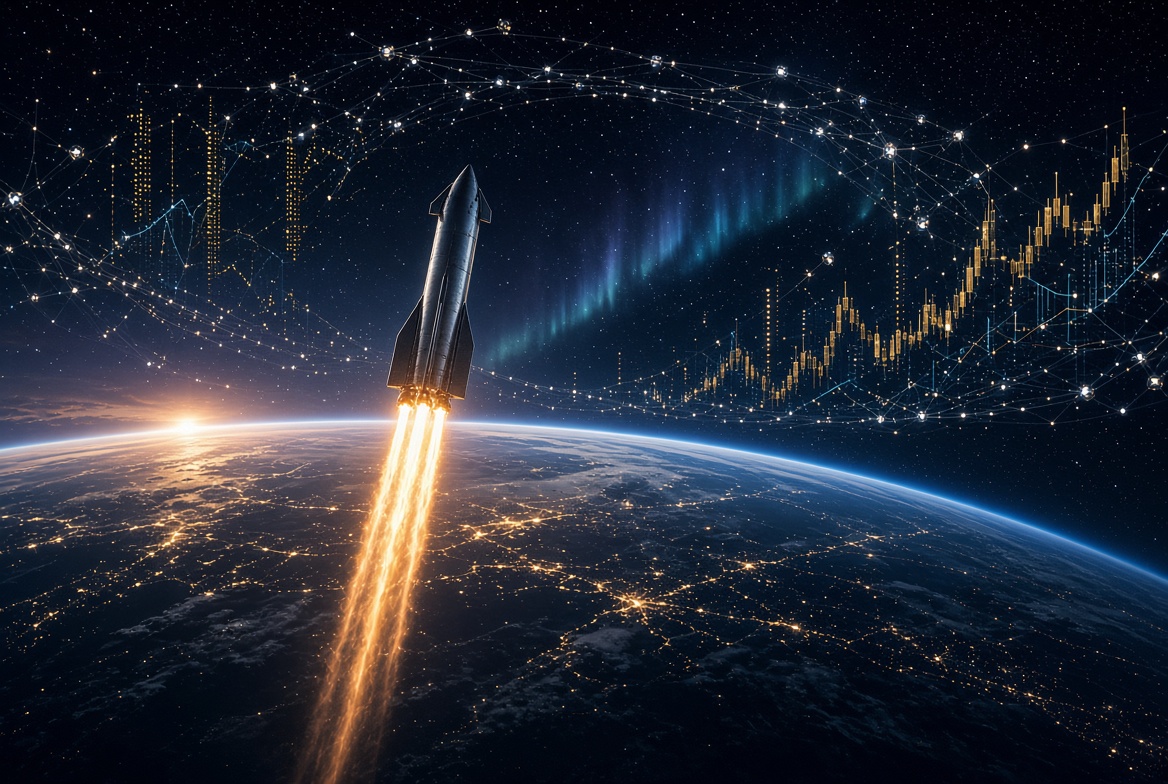
Is SpaceX Stock the Next Tesla? A Deep Look at SpaceX Stock, SPCX, and Its Long-Term Potential SpaceX has already become one of the most important technology companies in the world…
Is SpaceX Stock the Next Tesla? A Deep Look at SpaceX Stock, SPCX, and Its Long-Term Potential
SpaceX has already become one of the most important technology companies in the world, but the question investors are now asking is much bigger than whether the company can build better rockets.
Could SpaceX stock become the next Tesla?
The comparison is understandable. Both companies are closely associated with Elon Musk, both attempted to commercialize technologies that initially looked extremely difficult, and both have demonstrated an ability to turn ambitious engineering projects into enormous businesses.
But SpaceX is not simply another Tesla.
Following its landmark 2026 initial public offering, SpaceX became a publicly traded company under the ticker SPCX, giving ordinary investors direct exposure to a business spanning rocket launches, Starlink satellite communications, artificial intelligence infrastructure, data centers, and next-generation space technology. SpaceX priced its IPO at $135 per share, with shares beginning to trade on Nasdaq on June 12, 2026. The offering ultimately generated approximately $85.7 billion in gross proceeds after the underwriters exercised their overallotment option.
That changes the investment debate completely.
Instead of asking when SpaceX might go public, investors can now ask the more important question:
Is SpaceX stock reasonably valued relative to the growth opportunity ahead?
There are compelling reasons to believe SpaceX could become one of the defining companies of the next decade. There are also substantial risks, particularly around valuation, capital expenditure, Starship execution, AI spending, competition, regulation, and the extraordinary expectations already embedded in the stock.
SpaceX Stock: The Basic Investment Case
The SpaceX investment story can be divided into several interconnected businesses:
Starlink satellite internet
Commercial and government launch services
Starship and next-generation launch infrastructure
Artificial intelligence computing
Data centers
Satellite communications and mobile connectivity
Future orbital infrastructure
This combination is what makes the company unusual.
A traditional aerospace company might depend heavily on government contracts. A telecommunications company might depend primarily on subscribers and network infrastructure. An AI infrastructure company might focus on data centers and computing capacity.
SpaceX is attempting to combine all three — while also building the transportation system that could eventually make large-scale activity in space economically viable.
That creates enormous potential operating leverage if the company's technologies work at scale.
It also creates enormous execution risk.
The central question for investors is therefore not whether SpaceX has exciting technology. It clearly does.
The question is whether SpaceX can turn that technology into sufficiently large and profitable cash flows to justify its valuation.
Why Investors Compare SpaceX With Tesla
The Tesla comparison comes from more than Elon Musk's involvement.
Tesla spent years being treated as an ambitious but uncertain technology company. Manufacturing problems, cash requirements, competition and questions about demand repeatedly challenged the investment thesis.
Eventually, however, Tesla demonstrated that electric vehicles could become a mass-market business and that manufacturing scale, software, battery technology and vertical integration could produce a dramatically different economic model.
SpaceX faces a similar pattern.
Many of its most important opportunities depend on technologies that are still developing.
Reusable rockets need to become increasingly reliable and inexpensive.
Starship needs to evolve from an experimental launch system into a commercially useful transportation platform.
Starlink needs to continue adding customers while improving capacity and economics.
AI infrastructure requires enormous amounts of capital before producing corresponding returns.
The important similarity is therefore not simply that Musk runs both businesses.
It is the possibility that technological breakthroughs could unlock entirely new markets at enormous scale.
That is precisely the type of situation in which conventional valuation models can struggle.
SpaceX IPO: Why the 2026 Listing Matters
The 2026 SpaceX IPO was a landmark event for public markets.
SpaceX priced 555,555,555 shares at $135 each, with trading beginning on Nasdaq under the symbol SPCX. The company subsequently closed the offering with 638,888,888 shares sold after the full exercise of the underwriters' option, raising approximately $85.7 billion in gross proceeds.
This was significant for several reasons.
First, SpaceX gained access to a much larger pool of public-market capital.
Second, early investors and employees gained a liquid market for their holdings.
Third, the company became subject to the reporting and scrutiny associated with being publicly traded.
Most importantly, the IPO established a market price against which investors can now measure the company's future growth.
That makes valuation critical.
A private-company valuation can sometimes move dramatically between funding rounds. A publicly traded company must continuously convince shareholders that its earnings, cash flow and growth prospects justify its market capitalization.
For SpaceX, that means every major Starship launch, Starlink subscriber milestone, AI contract and capital expenditure decision can increasingly affect the public investment thesis.
The Starlink Advantage
If SpaceX eventually becomes one of the world's most valuable companies, Starlink may be one of the most important reasons.
Rocket launches attract the headlines, but Starlink provides something strategically different: recurring revenue.
The satellite internet network has transformed SpaceX from a company primarily associated with launches into a communications business with a potentially enormous recurring-revenue base.
Starlink can serve customers in locations where traditional broadband infrastructure is expensive, unavailable or impractical.
That includes:
Rural households
Remote communities
Ships
Aircraft
Businesses
Government agencies
Emergency services
Military users
Remote industrial operations
The economic attraction is straightforward.
A rocket launch generates revenue when a mission occurs.
A broadband subscriber can generate recurring revenue every month.
That distinction matters enormously when investors value a company.
Starlink Could Become the Financial Foundation
SpaceX's first earnings report as a public company showed revenue nearly doubling, with Starlink and AI businesses driving the growth. Management also projected a $100 billion annual revenue run rate by December 2026.
That projection illustrates how dramatically the company has changed.
The investment thesis is no longer simply:
SpaceX launches rockets.
It increasingly resembles:
SpaceX operates a global communications network, a launch system, AI computing infrastructure and a platform for future space-based businesses.
That is a much larger opportunity.
SpaceX and Artificial Intelligence
The biggest difference between the SpaceX story today and the SpaceX story investors might have imagined several years ago is artificial intelligence.
AI requires enormous computing capacity.
Training and operating increasingly sophisticated models requires data centers, processors, networking infrastructure, electricity and cooling.
SpaceX is attempting to participate in this infrastructure boom.
Recent reporting indicates that SpaceX has secured multiple large AI-compute agreements and is targeting approximately $100 billion in annual recurring revenue. A newly announced agreement worth roughly $1.1 billion per month would add around $13 billion in annualized revenue once it begins.
This could become a major component of the SpaceX valuation.
However, investors should distinguish between AI revenue growth and AI profitability.
A company can generate enormous revenue while spending even more money building the infrastructure necessary to support that revenue.
That is one of the central questions surrounding SpaceX today.
The xAI Connection
SpaceX's relationship with artificial intelligence has also become increasingly important following its combination with Elon Musk's xAI business.
The strategic logic is powerful.
AI needs computing infrastructure.
SpaceX has access to energy, land, satellite communications, launch capabilities and enormous engineering resources.
xAI provides AI models and software.
Together, these assets create the possibility of a vertically integrated AI ecosystem.
The opportunity extends beyond conventional terrestrial data centers.
SpaceX has also discussed orbital computing infrastructure, potentially using satellites to provide computing capacity in space.
That concept remains highly ambitious, but it illustrates the scale of the company's long-term vision.
SpaceX's $100 Billion Revenue Ambition
One of the most important figures for investors to monitor is SpaceX's stated ambition to reach a $100 billion annual revenue run rate.
Management's target demonstrates the company's confidence in the expansion of Starlink, AI computing and related businesses.
But revenue alone should never determine whether SPCX is attractive.
Investors should ask five additional questions:
How quickly is revenue growing?
What percentage converts into operating profit?
How much capital expenditure is required to generate each additional dollar of revenue?
How durable are the contracts?
What valuation multiple is the market assigning to future earnings?
Those questions are particularly important because SpaceX is operating in capital-intensive industries.
Why Starship Could Be the Biggest Catalyst
Starship may ultimately be more important to SpaceX than Falcon 9.
Falcon 9 established the company's reusable-launch model.
Starship is intended to take that concept much further.
The rocket is substantially larger and is designed to dramatically increase payload capacity while pursuing full reusability.
If SpaceX succeeds in making Starship rapidly reusable, the economics of launching large payloads into orbit could change substantially.
The potential applications are enormous:
Large Starlink satellite deployments
Government missions
Commercial satellite launches
Lunar missions
Deep-space exploration
Space-station logistics
Large-scale orbital infrastructure
Potential orbital data centers
Analysts have argued that successful Starship reusability could materially increase SpaceX's valuation because the system could become a critical bottleneck-breaker for several of the company's businesses.
The important point is that Starship is not merely another rocket.
It could become the infrastructure on which several future SpaceX businesses depend.
Why SpaceX Could Outgrow Traditional Aerospace Companies
Traditional aerospace companies generally operate through large contracts, long development cycles and complex supply chains.
SpaceX has increasingly emphasized vertical integration.
The company designs and manufactures many of its own critical systems rather than relying entirely on outside suppliers.
That approach can create several advantages:
Faster engineering iteration
Greater control over manufacturing
Lower dependence on suppliers
Potentially lower costs
Faster deployment of new technology
Better integration between hardware and software
Tesla used a similar philosophy in the automotive industry.
SpaceX is applying the concept to aerospace and communications.
That does not guarantee success, but it can create an important structural advantage when the company is attempting to innovate faster than established competitors.
SpaceX vs Tesla: The Most Important Similarities
The comparison becomes more useful when we separate genuine similarities from superficial ones.
1. Founder-led companies
Both companies are strongly associated with Elon Musk.
That can be an advantage because founders often have unusually long investment horizons.
A conventional executive might prioritize quarterly results.
A founder may be willing to spend years developing technology that does not immediately produce profits.
For SpaceX, this is particularly important because rockets, satellites and space infrastructure require long development cycles.
2. Vertical integration
Tesla pursued increasing control over manufacturing, batteries, software and supply chains.
SpaceX similarly controls a large portion of its engineering and manufacturing process.
3. Difficult technological problems
Both companies entered industries where established players had strong advantages.
Tesla challenged the conventional automobile industry.
SpaceX challenged the traditional launch industry.
4. Huge potential markets
Tesla's potential market was global transportation.
SpaceX's potential market extends across communications, launch services, AI infrastructure and space-based infrastructure.
5. Extreme investor expectations
This similarity is also a warning.
Tesla's extraordinary historical performance created expectations that were difficult to satisfy.
SpaceX faces the same problem today.
A great company can become a poor investment if investors pay too much for its future growth.
SpaceX vs Tesla: The Critical Differences
The differences may actually be more important.
Tesla operates primarily in an enormous but relatively mature global industry: transportation.
SpaceX operates across several emerging markets.
Space technology is less predictable.
AI is evolving extremely rapidly.
Satellite communications face regulatory and competitive risks.
Starship is still an engineering development program.
Therefore, SpaceX may have a larger theoretical growth opportunity than Tesla had at a comparable stage, but it also has a more complicated risk profile.
That makes valuation analysis especially important.
Could SpaceX Stock Repeat Tesla's Historic Gains?
The answer depends almost entirely on the starting valuation.
Tesla's enormous historical returns came from a combination of:
Rapid revenue growth
Increasing investor confidence
Expanding margins
Manufacturing scale
Growing market share
New business opportunities
A dramatic re-rating of the company's valuation
SpaceX would need a similar combination to produce another extraordinary multi-decade return.
It is not enough for SpaceX to become a great company.
The company must become more valuable than today's market expects.
That distinction is fundamental.
If investors already price SpaceX as one of the world's most valuable companies, future returns may be much lower even if the underlying business performs exceptionally well.
SpaceX Valuation: The Biggest Question for Investors
Valuation is arguably the strongest argument against blindly buying SpaceX stock.
The company entered public markets with an extraordinary valuation.
SpaceX's first public-company earnings report described a business valued around $1.75 trillion, while subsequent market expectations have moved significantly as investors assess its AI, Starlink and launch businesses.
At such a valuation, investors are no longer paying only for the current business.
They are paying for a significant portion of the future.
That future may include:
A much larger Starlink network
AI data centers
Orbital computing
Starship
Expanded defense activity
Mobile connectivity
New satellite services
Potentially massive space infrastructure markets
The stock therefore carries substantial execution expectations.
What Could Make SpaceX Stock Rise?
Several developments could support a long-term bull case for SPCX.
Successful Starship Reusability
If Starship becomes reliably reusable, launch economics could improve dramatically.
Continued Starlink Growth
More subscribers, higher average revenue per user and new enterprise applications could increase recurring revenue.
AI Compute Expansion
Large AI contracts could turn SpaceX into a major computing-infrastructure provider.
Improved Capital Efficiency
If SpaceX can generate increasingly large revenue streams without proportional increases in capital spending, operating leverage could become significant.
New Government Contracts
Defense and national-security demand could become another major revenue source.
Satellite-to-Phone Services
Direct-to-device connectivity could expand the addressable market beyond conventional Starlink broadband.
Orbital Infrastructure
If space-based computing becomes economically viable, SpaceX could potentially create an entirely new category of infrastructure.
The Biggest Risks Facing SpaceX Stock
The SpaceX bull case is compelling, but the risks deserve equal attention.
1. Valuation Risk
The simplest risk is paying too much.
Even a company that grows rapidly can produce disappointing stock returns if its valuation already assumes extraordinary success.
2. Starship Risk
Starship represents enormous potential but also enormous technical complexity.
Delays, failed tests or slower-than-expected reusability could affect several parts of the long-term investment thesis.
3. Capital Expenditure
SpaceX is spending heavily on AI infrastructure and other expansion projects.
Recent reporting indicates that the company invested approximately $16 billion in AI infrastructure during the second quarter and expects substantial additional spending.
Large investments can produce exceptional returns if successful.
They can also destroy shareholder value if demand or pricing falls short.
4. AI Competition
The AI infrastructure market is extremely competitive.
Companies such as hyperscale cloud providers and specialized AI infrastructure businesses are investing enormous sums.
SpaceX needs to demonstrate that its infrastructure creates durable economic advantages rather than simply benefiting from temporary shortages of computing capacity.
5. Elon Musk Risk
Musk is arguably one of SpaceX's greatest advantages and one of its greatest risks.
His technical ambition and willingness to pursue extremely difficult projects have been central to SpaceX's development.
At the same time, his involvement in multiple businesses and public controversies can create management, political, regulatory and reputational risks.
6. Regulatory Risk
Space launches, satellite communications, defense contracts, spectrum and AI infrastructure are all heavily regulated.
Changes in government policy can affect SpaceX's growth trajectory.
7. Competition
SpaceX does not operate without rivals.
Rocket Lab, Blue Origin, Firefly Aerospace and other launch companies are developing reusable or partially reusable systems.
The competitive environment could become significantly more challenging if reusable launch technology spreads.
Could Starlink Be Worth More Than the Rocket Business?
This is one of the most interesting questions surrounding SpaceX.
The launch business receives much of the publicity because rockets are visually spectacular.
But investors tend to value recurring revenue businesses differently from project-based businesses.
A successful Starlink operation could potentially produce:
Predictable subscription revenue
High customer retention
Global scale
Network effects
Enterprise contracts
Government contracts
Mobile connectivity opportunities
If Starlink continues expanding while improving its economics, it could become one of the principal financial engines supporting the rest of SpaceX.
The company's future valuation may therefore depend less on how many rockets it launches and more on how effectively it converts space infrastructure into recurring cash flow.
The Role of Government and Defense
SpaceX's commercial ambitions should not obscure its importance to governments.
Launch infrastructure and satellite communications have strategic value.
Governments require resilient communications networks, reconnaissance capabilities, launch capacity and secure access to space.
SpaceX's technology can serve several of these requirements.
The result is potentially powerful diversification.
Commercial customers provide one source of revenue.
Government customers provide another.
Starlink creates recurring connectivity revenue.
AI infrastructure creates another growth channel.
That combination could reduce dependence on any individual market.
Why SpaceX Could Become More Than a Space Company
The most important shift in the SpaceX story is that the company is becoming difficult to categorize.
Calling it an aerospace company is increasingly incomplete.
Calling it a satellite internet company is also incomplete.
Calling it an AI company is premature by itself.
The better description may be an integrated technology and infrastructure company built around space.
Its assets increasingly span:
Transportation → Satellites → Communications → Computing → AI → Data Centers → Orbital Infrastructure
That creates optionality.
If only one of these businesses becomes enormous, SpaceX could still be highly successful.
If several become enormous simultaneously, the resulting valuation could be extraordinary.
A Simple SpaceX Investment Framework
Rather than attempting to predict a precise SPCX share price, investors can monitor several measurable milestones.
| Metric | Bullish Signal | Warning Signal |
|---|---|---|
| Starlink revenue | Sustained rapid growth | Growth slows materially |
| Starlink profitability | Improving margins | Rising costs overwhelm revenue |
| AI contracts | Large recurring agreements | Contracts fail to convert into durable revenue |
| AI capital spending | Strong returns on investment | Spending rises faster than revenue |
| Starship | Increasing reliability and reusability | Persistent delays |
| Launch cadence | Rapidly increasing | Capacity constraints |
| Free cash flow | Improving | Persistent heavy cash burn |
| Valuation | Growth outpaces expectations | Valuation rises faster than earnings |
| Competition | SpaceX retains cost advantage | Rivals close technology gap |
| Regulation | Supportive policies | Major restrictions or delays |
This framework is more useful than focusing exclusively on headlines.
What Would Make SpaceX the Next Tesla?
For SpaceX to genuinely replicate Tesla's investment success, several things would probably need to happen simultaneously.
First, Starlink would need to become a massive and highly profitable communications platform.
Second, Starship would need to achieve a level of reusability that materially lowers launch costs.
Third, AI infrastructure would need to become a significant and profitable business rather than simply a capital-intensive expansion project.
Fourth, SpaceX would need to maintain its engineering advantage while scaling the organization.
Fifth, management would need to allocate capital intelligently.
And finally, the company's valuation would need to remain reasonable relative to its growth.
The last condition is frequently overlooked.
A great business does not automatically equal a great stock.
Could SpaceX Become a Trillion-Dollar Company?
That question is already outdated.
SpaceX entered public markets with a valuation measured in the trillions.
The more relevant question is whether SpaceX can justify and potentially expand upon that valuation through sustained growth in earnings and free cash flow.
That is a much higher bar.
At trillion-dollar valuations, incremental improvements are no longer enough.
SpaceX needs enormous markets.
Fortunately for the company, the markets it is pursuing are enormous:
Global broadband
Mobile connectivity
AI computing
Cloud infrastructure
Commercial launch
Defense
Satellite communications
Space transportation
Orbital infrastructure
The opportunity is therefore large enough.
The uncertainty is whether SpaceX can capture enough of it profitably.
SpaceX Stock Price vs Business Value
Investors should avoid confusing the movement of SPCX with the underlying value of SpaceX.
A stock price can rise because:
Earnings increase
Future expectations increase
Interest rates fall
Investor enthusiasm increases
Valuation multiples expand
Likewise, the stock can fall even while the business improves if investors expected even faster growth.
This is particularly important for SpaceX because expectations are unusually high.
A disappointing Starship milestone or weaker-than-expected AI growth could affect the share price even if the long-term business remains strong.
Conversely, an unexpectedly successful Starship mission or major Starlink milestone could produce a powerful re-rating.
Is SpaceX Stock a Long-Term Investment?
For investors with a long time horizon, SpaceX presents a rare combination of scale and optionality.
The company already operates major businesses.
At the same time, it is attempting to create several entirely new markets.
That combination is unusual.
The long-term bull case does not require every experiment to succeed.
Starlink could succeed while another initiative struggles.
AI infrastructure could become enormous even if orbital computing takes longer than expected.
Starship could transform launch economics without immediately producing a new space economy.
The investment thesis therefore has multiple potential paths to success.
The problem is that the market knows this.
That is why valuation remains central.
The Most Important Question: What Are We Paying For?
Before buying SPCX, investors should separate the company into three categories.
Existing businesses
These include operations that already generate meaningful revenue, particularly Starlink and launch services.
Emerging businesses
These include AI computing and expanded connectivity services.
Long-term options
These include orbital data centers, advanced Starship applications and other future space infrastructure.
A rational valuation should not treat all three categories as equally certain.
Existing cash-generating businesses deserve the highest confidence.
Emerging businesses deserve substantial but more conservative assumptions.
Long-term options should carry significant uncertainty.
This approach can prevent investors from paying today's price for tomorrow's dreams.
SpaceX vs Tesla: Which Has Greater Long-Term Potential?
There is no simple winner.
Tesla demonstrated that an engineering-driven company could transform a traditional industry and become one of the world's most valuable businesses.
SpaceX may be attempting something even broader.
Instead of transforming one major industry, it is simultaneously attacking multiple infrastructure markets.
That gives SpaceX greater theoretical upside.
It also gives the company more ways to fail.
Tesla's biggest challenge was scaling electric vehicles profitably.
SpaceX has to scale satellites, launches, AI infrastructure, computing, communications and potentially orbital infrastructure.
The complexity is extraordinary.
Our Long-Term View of SpaceX Stock
SpaceX has many of the characteristics investors look for in a potentially transformational company:
A powerful founder
Proprietary technology
Strong engineering capabilities
Significant infrastructure
Recurring revenue through Starlink
Exposure to AI
Exposure to defense
Exposure to telecommunications
A massive potential market
Opportunities for vertical integration
Multiple future growth engines
Those characteristics make the company highly compelling.
But they do not eliminate investment risk.
The central challenge is that SpaceX's potential is already widely recognized.
Investors therefore need to distinguish between owning an extraordinary company and buying its shares at an attractive price.
That distinction could determine whether SPCX becomes another spectacular long-term investment or simply a spectacular company whose stock produces more ordinary returns from an expensive starting point.
Final Verdict: Is SpaceX Stock the Next Tesla?
SpaceX could become one of the defining companies of the next decade.
The similarities with Tesla are real: ambitious technology, vertical integration, founder-led management, enormous addressable markets and a willingness to pursue projects that conventional competitors initially considered unrealistic.
But the SpaceX story is arguably larger.
Starlink provides recurring communications revenue. Reusable rockets provide a potential cost advantage in launch. Starship could dramatically expand the company's capacity. AI computing creates another enormous market. Defense and government contracts add strategic demand. And future orbital infrastructure could open opportunities that barely exist today.
The bull case is therefore exceptionally powerful.
The bear case is equally straightforward: the expectations are already enormous.
SpaceX must execute.
Starship must progress.
Starlink must continue growing.
AI investments must generate attractive returns.
Capital expenditure must eventually translate into stronger free cash flow.
And the valuation must not run too far ahead of the underlying business.
That leads to a more nuanced conclusion than simply calling SpaceX "the next Tesla."
SpaceX has the potential to become something even larger than Tesla, but SPCX will only become an exceptional investment if the company's future growth exceeds what today's valuation already anticipates.
For long-term investors, the most important figures to watch are therefore not simply the SpaceX stock price or the latest rocket launch.
Watch revenue growth, Starlink economics, AI contract quality, capital expenditure, free cash flow, Starship progress and valuation.
If those indicators improve together, the argument for SpaceX as a generational growth company becomes considerably stronger.
If the valuation rises much faster than those fundamentals, caution becomes increasingly important.
The next decade will ultimately determine whether SpaceX becomes merely another enormous technology company — or one of the most consequential businesses ever created.
SpaceX Stock Investor Checklist
Before considering SPCX, investors can ask:
Is SpaceX growing revenue faster than its valuation?
Is Starlink becoming increasingly profitable?
Are AI infrastructure investments producing attractive returns?
Is Starship moving toward reliable full reusability?
Is free cash flow improving?
Are new businesses becoming economically meaningful?
Does the company maintain a technological advantage?
Is management allocating capital efficiently?
Are government and regulatory conditions supportive?
Does the current SPCX valuation leave room for future returns?
If the answers increasingly point in the right direction, SpaceX's long-term investment case becomes difficult to ignore.
If the business succeeds but the market price already assumes near-perfect execution, however, the stock may still disappoint.
That is the real SpaceX-versus-Tesla question: not whether SpaceX can become an extraordinary company, but whether it can become even more extraordinary than today's investors already expect.
Frequently Asked Questions About SpaceX Stock
Is SpaceX stock publicly traded?
Yes. SpaceX completed its initial public offering in June 2026, and its Class A common stock began trading on Nasdaq under the ticker SPCX on June 12, 2026.
What is the SpaceX stock ticker?
The SpaceX stock ticker is SPCX.
When did SpaceX go public?
SpaceX began public trading on June 12, 2026. The IPO was priced at $135 per share.
Is SpaceX the next Tesla?
SpaceX shares several characteristics with Tesla, including founder-led management, vertical integration and exposure to transformational technologies. However, SpaceX operates across more industries, including aerospace, satellite communications and AI infrastructure. Whether SPCX produces Tesla-like investment returns depends heavily on future growth and the valuation investors pay today.
Is SpaceX stock a good long-term investment?
SpaceX has substantial long-term growth potential, but the stock also carries significant valuation and execution risks. Investors should evaluate the company's revenue growth, profitability, capital spending, Starlink performance, AI investments and Starship progress rather than relying solely on the company's reputation or Elon Musk's track record.
What makes SpaceX valuable?
SpaceX's value comes from multiple businesses and assets, including Starlink, launch services, reusable rocket technology, AI computing infrastructure, data centers, satellite communications and potential future space infrastructure.
Could Starlink be the most valuable part of SpaceX?
It is possible. Starlink's recurring subscription model gives SpaceX exposure to a large communications market and could provide an increasingly important source of revenue and cash flow as the network expands.
Why is Starship important to SpaceX stock?
Starship could significantly increase launch capacity and reduce the cost of moving large payloads into orbit if SpaceX achieves reliable and rapid reusability. That could benefit Starlink, commercial launches, government missions and future orbital infrastructure.
What is the biggest risk to SpaceX stock?
Valuation is one of the biggest risks. Even if SpaceX continues growing rapidly, shareholders can experience poor returns if the stock price already reflects extremely optimistic assumptions about future revenue and profitability.
Does SpaceX make money from AI?
AI and computing infrastructure have become an increasingly important part of SpaceX's growth strategy. Recent company disclosures and reporting indicate that SpaceX has secured major AI-compute agreements while investing heavily in additional infrastructure.
Can SpaceX become more valuable than Tesla?
There is no certainty, but SpaceX operates in several potentially enormous markets. If Starlink, AI infrastructure, launch services and next-generation space technologies all scale successfully, the company's long-term opportunity could be exceptionally large.